Best competency management software in 2026
Comparing competency management software in 2026? We’ve reviewed the top 8 platforms — covering features, industry fit, and what to look for before you buy.

 Reviewed by Adam Kohut

If you’ve landed here, you’ve already decided your organisation needs competency management software, now you’re choosing between platforms. You’re not alone: data from this SERP shows that 63% of people searching this term are in active comparison mode.
This guide reviews 8 of the best competency management software platforms available in 2026, covering features, industry fit, and honest limitations to help you make the right call. AG5 is listed first because this is AG5’s page, but every tool is assessed fairly. Buyers trust honest comparisons, and so do search engines. The goal of this guide is to give you a clear, accurate basis for shortlisting, not to sell you on any single platform.
Not sure what competency management involves yet? Start with our guide to what is competency management before returning here to compare platforms.
What to look for in competency management softwareCopied
Before comparing specific platforms, it helps to agree on what a serious competency management tool actually needs to do. The criteria below are based on what matters to buyers in operational and regulated settings, not the generic SaaS checklist you’ll find on most review sites. Below are the six criteria that matter most to buyers in manufacturing, aerospace, oil & gas and other regulated environments.
Skills matrix and gap analysis
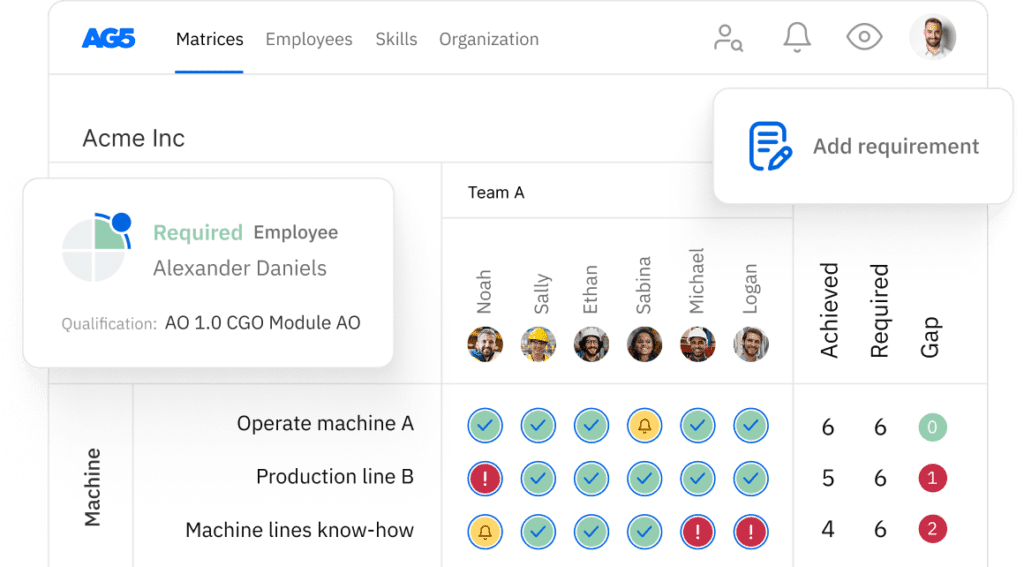
The foundation of any competency management system is a live skills matrix template that maps employees to roles and surfaces gaps automatically. Manual spreadsheets can’t scale or stay current. Look for a platform that updates in real time and flags gaps without requiring a manager to run a report. A structured competency gap analysis process should be built into the workflow, not bolted on.
Audit trail and compliance reporting
For regulated industries, audit readiness is non-negotiable. Your software must produce timestamped records of assessments, sign-offs and certification status, on demand, not after a week of data preparation. If an auditor walks in tomorrow, your system should be able to generate the required evidence in minutes. Platforms without a full audit trail are not suitable for ISO 9001, ISO 45001 or AS9100 environments. Worth noting: if your current process still relies on spreadsheets, see how AG5 vs Excel for competency management compares on auditability and scale.
Industry fit: Manufacturing and regulated environments vs generic HR
Many competency tools on the market are built around corporate HR and talent development workflows, career pathing, performance reviews, succession planning. These are not the same as operational competency management. A platform built for a tech company’s L&D team will frustrate an Operations Manager tracking machine-specific certifications on a production floor. Understand whether the tool was designed for your environment before committing.
Integration with HRIS and LMS
Competency management software sits between your HR system (where employee records live) and your LMS (where training is delivered). A platform that doesn’t integrate with either creates data duplication and manual work. Ask specifically about API connections to your HRIS, particularly SAP, Workday, or specialist manufacturing ERPs, and whether training completions automatically update competency records.
Ease of adoption
A platform that takes six months to implement and requires dedicated admin resource will fail in most organisations. Frontline supervisors and quality managers need to be able to update competency records, approve assessments and read skills matrices without training beyond a short onboarding session. If the tool requires a specialist to run reports, it won’t be used consistently.
Assessment flexibility
Different industries assess competency differently, practical observation, written test, manager sign-off, third-party certification. Your platform should support the assessment methods your business actually uses, not force you to adapt your process to the software. This is particularly relevant when evaluating competency assessment software functionality across platforms.
The best competency management software in 2026Copied
The following eight platforms cover the range of options available to buyers in 2026, from purpose-built operational compliance tools to broader talent management suites that include competency features as part of a wider HR offering. Each entry is based on publicly available product information, assessed against the criteria above. We’ve included a genuine strength and a genuine limitation for each, because a listicle that only says nice things about every tool is not useful when you’re making a real purchasing decision.
1. AG5, Best competency management software for regulated industries
AG5 is purpose-built for manufacturing, aerospace, oil & gas and logistics organisations that need audit-ready competency management, not a generic HR feature set dressed up as a compliance tool.
- Live skills matrix that updates in real time as assessments are completed and certifications are renewed
- Automated gap analysis that flags skill shortfalls at team, department and site level without manual reporting
- Certification expiry tracking with automated alerts, so no certification lapses without warning
- ISO-compliant audit reporting for ISO 9001, ISO 45001 and AS9100 requirements
- Training matrix integration to connect identified competency gaps directly to training assignments
- Scales to workforces of 5,000+ employees across multiple sites
- Built-in competency assessment software capability for configuring assessment workflows, approvals and proficiency ratings against role requirements
Best fit: Operational teams in manufacturing, aerospace and energy that need demonstrable compliance. Not the strongest choice for corporate L&D-only programmes where competency is used primarily for career development rather than regulatory compliance. See how the AG5 competency management system works.
2. Kahuna Workforce Solutions
Kahuna is built for frontline and field workforces across energy, healthcare and manufacturing, with a focus on deskless workers who need mobile-accessible competency tools.
- Competency frameworks designed specifically for deskless and field-based workers
- Mobile-first assessments for operatives who aren’t desk-based
- Workforce capability insights and analytics dashboards
- Competency tracking tied to safety-critical qualification requirements in high-risk environments
Best fit: Large enterprise field operations in energy, utilities or healthcare with complex, mobile workforces and safety-critical qualification requirements. Enterprise pricing and implementation complexity make it overkill for mid-market teams or organisations looking for a lighter-touch deployment without a dedicated implementation resource.
3. TalentGuard
TalentGuard targets mid-market HR teams focused on career development, performance management and succession planning rather than operational compliance.
- Extensive competency library with pre-built frameworks across a range of roles and functions
- Job profile mapping that links competency requirements to specific roles
- Career development plans with linked learning resources
- Performance review integration that connects competency ratings to annual appraisal cycles
Best fit: HR and people teams in mid-market organisations focused on talent development and performance management. Less suited to regulated operational environments where audit trail integrity, certification expiry tracking and compliance reporting are the primary requirements rather than career development.
4. Centranum
Centranum is a broad talent management platform aimed at SMEs that want competency management as part of a wider HR suite rather than as a standalone operational tool.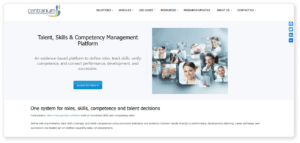
- 360 feedback functionality for multi-rater competency assessment
- Competency library with customisable frameworks
- Gap analysis and succession planning built into the same platform
Best fit: SMEs that want a combined HR and competency platform. Less specialized for manufacturing or operational use cases, and some users report the interface can feel dated compared to newer tools in the market.
5. Avilar WebMentor Skills
Avilar’s WebMentor Skills has been around for years and is used primarily in government, defence and large enterprise, where established, highly customisable competency models are required.
- Highly customisable competency models built around your organisation’s specific taxonomy
- Skills assessments with configurable rating scales
- Workforce planning tools for longer-range capability development
Best fit: Established large organisations, particularly in government and defence, that have mature competency programmes and need flexibility rather than speed of deployment. The platform has a legacy feel, better suited to organisations with existing programme infrastructure than those building from scratch.
6. CloudAssess
CloudAssess is primarily an assessment platform, widely used by training providers and Registered Training Organisations (RTOs) that need robust assessment creation and competency tracking in a single system.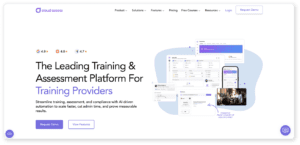
- Flexible assessment creation tools for designing and delivering a wide variety of assessment types
- Competency tracking tied directly to assessment outcomes
- Compliance reporting designed for training and assessment organisations
Best fit: Training providers and RTOs with assessment-heavy workflows. The platform is assessment-first, it is not a natural fit for organisations that need an operational skills matrix as the primary view of workforce capability.
7. SkillPanel
SkillPanel is a skills intelligence platform that has gained traction with tech companies and software businesses focused on internal mobility and skills-based talent development.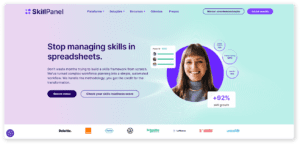
- Skills intelligence engine that maps employee skills across the organisation
- Career pathing and internal mobility tools for knowledge workers
- Development planning integrated with skills gap identification
Best fit: Technology and software organisations focused on skills development for knowledge workers. Less suited to frontline operational environments or regulated industries where ISO compliance and certification tracking are central requirements.
8. Bullseye Engagement
Bullseye Engagement is a small to mid-market HR platform used primarily by US-based organisations that want performance management and competency features in a single tool.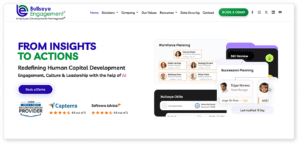
- Competency library with pre-built frameworks that can be adapted to your role structure
- Performance management integration, competencies feed into review cycles
- Development planning tools for employees and managers
Best fit: Small to mid-market US businesses with general HR requirements. The interface is dated relative to newer entrants in the market, and the platform has limited industry-specific capability, better suited to general HR use than compliance-driven operational environments.
How to choose the right competency management software for your industryCopied
For buyers in manufacturing, aerospace, oil & gas and logistics, the tool selection criteria are materially different from those used by an HR team in a professional services firm. Three factors drive the decision in regulated industries:
Regulatory compliance requirements. If your organisation operates under ISO 9001 Clause 7.2, ISO 45001 or AS9100, your software must produce evidence that satisfies those standards, not roughly similar data. Generic HR platforms often lack the specific report formats and audit trail structures that regulated industries require. An auditor won’t accept a manually compiled spreadsheet as evidence of a functioning competency management process. Your Quality Manager or HSE lead should be involved in the software evaluation, not just HR.
Audit readiness as baseline, not feature. For most HR tools, audit reporting is a feature. For operational competency management in regulated industries, audit readiness is the minimum viable product. If the platform can’t produce a timestamped, role-by-competency evidence trail on demand, it doesn’t meet the requirement, regardless of how good its career pathing or performance review functionality is. Ask any vendor to demonstrate how they’d handle an unannounced audit scenario before you proceed to procurement.
The gap between generic HR tools and operational competency platforms. The tools reviewed above cover a wide spectrum. Platforms like TalentGuard, SkillPanel and Bullseye are built for corporate HR functions, they’re not wrong, they’re just solving a different problem. If you’re managing competency on a production line, in a maintenance team or across a multi-site aerospace operation, you need a platform that was designed for that context. Read more about skills management for manufacturing to understand the specific capability requirements for industrial environments.
Practical evaluation steps. Before shortlisting, define your non-negotiables: which certifications need tracking, which standards you operate under, and how many sites and employees are in scope. Request a live demo using your own job roles and competency requirements, not a canned demo built around the vendor’s best-case scenario. Check integration capability with your existing HRIS or ERP, and ask for references from organisations in your sector.
For a deeper look at how AG5 addresses these requirements, see the competency management system product page.
Competency management software vs skills management softwareCopied
These terms are often used interchangeably, and the underlying platforms frequently overlap in capability. The practical distinction is one of emphasis: competency management software typically focuses on whether an employee meets a defined proficiency standard for a specific role. Skills management software tends to take a broader view, mapping all skills an employee possesses, whether or not they’re required for their current role.
In regulated operational environments, the competency framing is usually more relevant: you need to know that Engineer A is certified to operate Machine X to Level 3, not that they have a broadly transferable mechanical aptitude. In tech or knowledge-worker environments, the skills framing is often more useful for internal mobility and development planning. The distinction also matters when evaluating vendors: a platform that leads with ‘skills intelligence’ may be optimized for knowledge-worker development rather than compliance-driven operational settings.
Many platforms cover both, so the distinction is more useful for clarifying your requirements than for filtering your shortlist. If you’re still clarifying the concepts, our guide to what is competency management covers the definitional ground in detail.
FAQs Copied
-
What is competency management software?
-
What's the difference between competency management software and a learning management system (LMS)?
-
Which competency management software is best for manufacturing?
-
How much does competency management software cost?
-
Can competency management software integrate with our existing HRIS or LMS?
Author Copied

Revisions Copied
Written by: Rick van Echtelt
Copy edited by: Adam Kohut