Tribal knowledge in manufacturing: Capturing critical skills before they walk out the door
Tribal knowledge walks out the door when experts leave. What it is, why it’s risky, and a framework to capture and transfer critical skills.

 Reviewed by Adam Kohut
What is tribal knowledge?Copied
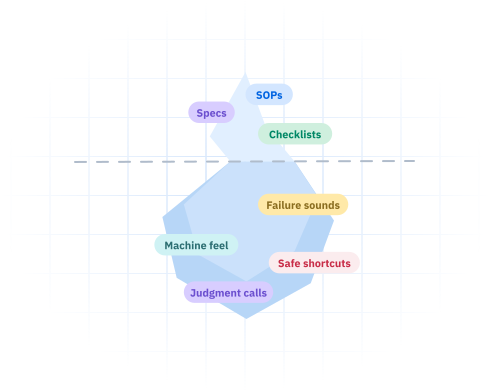
Tribal knowledge is the undocumented know-how that lives in the heads of experienced employees rather than in written procedures or systems. It covers the shortcuts, machine quirks, and judgment calls that keep production running, and it walks out the door whenever those experts leave.
You will also hear it called institutional knowledge or tacit knowledge. Whatever the label, every plant has it: the maintenance tech who diagnoses a failing bearing by sound, the operator who knows the old press needs an extra warm-up cycle on cold mornings, the “ask Maria” answer to any question about line 3. This know-how is valuable precisely because it works, and dangerous precisely because nobody wrote it down.
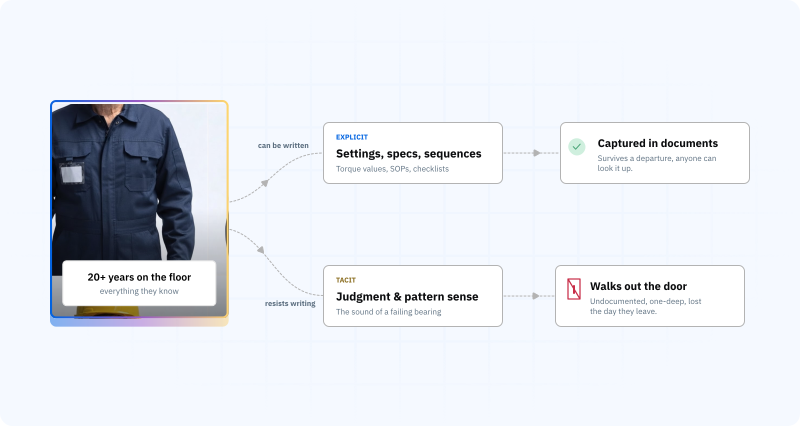
The useful distinction is between explicit and tacit knowledge. Explicit knowledge can be written down and usually already is: settings, sequences, specifications. Tacit knowledge resists writing, because it is pattern recognition built from years of repetition, like hearing that a bearing is about to fail. Capture programs stall when they treat everything as explicit and expect a form to hold what actually requires demonstration.
Why it’s a growing risk (aging workforce, turnover)Copied
The demographics are working against you. According to The Manufacturing Institute, roughly one-quarter of the US manufacturing workforce is 55 or older, and while 97% of surveyed manufacturers are aware of the aging trend, 78% say they are concerned about it. Awareness has clearly outrun action.
Retirements collide with a hiring shortfall. Deloitte and The Manufacturing Institute estimate that as many as 2.1 million manufacturing jobs could go unfilled by 2030, and 34% of manufacturers name baby boomer retirements as a top reason positions stay open. Every one of those retirements takes decades of unwritten expertise along with it.
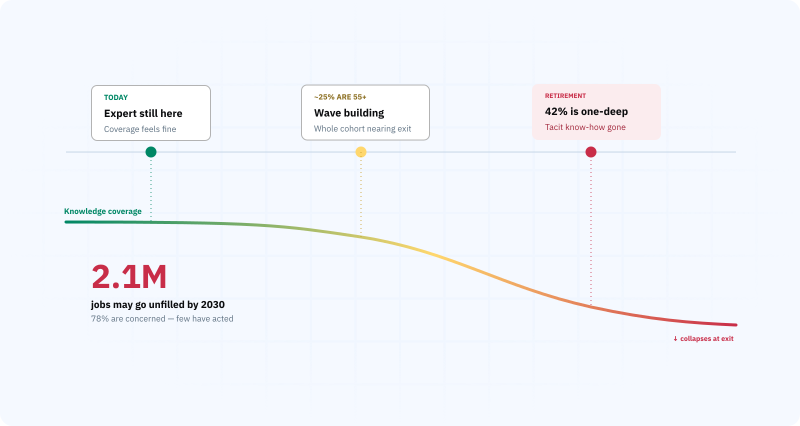
The exposure is not evenly distributed, either. It pools in maintenance, setup, and quality roles, where experience compounds for decades, and at older sites running legacy equipment no vendor manual describes accurately anymore. A plant can have a young average workforce and still be one retirement away from losing the only person who can coax its oldest line back to life.
Turnover compounds the problem from the other end. When tenures shorten, workforce skills leave faster than they accumulate, and the veterans who remain spend more of their time answering questions instead of producing. The knowledge concentrates in fewer heads each year, which is the opposite of what resilience requires.
For certified manufacturers, this is also a compliance matter. ISO 9001:2015 clause 7.1.6 requires organizations to determine the knowledge necessary for their operations, maintain it, and make it available, which turns knowledge capture from good housekeeping into an auditable obligation. An operation that cannot show how critical know-how survives a departure has a nonconformity waiting to be written.
None of this argues for panic hiring. It argues for changing what happens between now and each departure date, which is the part the organization actually controls.
A framework to capture and transfer itCopied
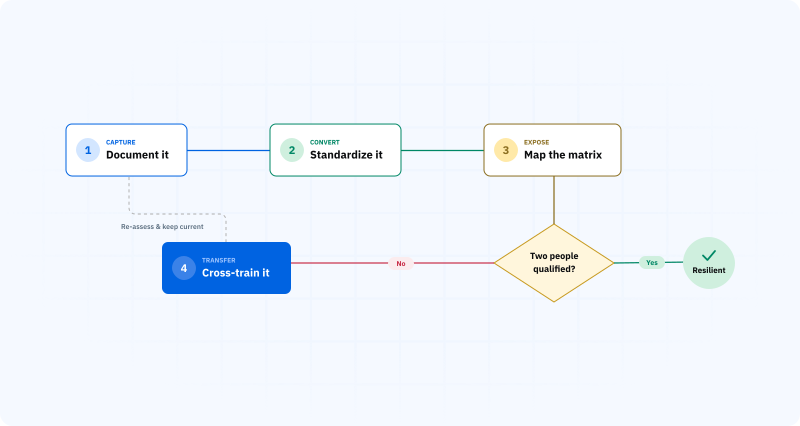
Capturing tribal knowledge is a process, not a project. Four steps, in order:
- Document it. Start with the highest-risk experts: those closest to retirement or holding one-deep skills. Structured interviews work, but recording the expert at the machine works better, because people demonstrate things they would never think to mention. Capture the why behind each step, not just the sequence. Prioritize ruthlessly: no plant can document everything, and trying to guarantees nothing gets documented well.
- Standardize it. Raw documentation is an archive; standardized documentation is an asset. Convert what you captured into SOPs and named, assessable skills within a single taxonomy, so “knows the press” becomes specific competencies with defined proficiency levels. A structured skills inventory is the natural home for this conversion.
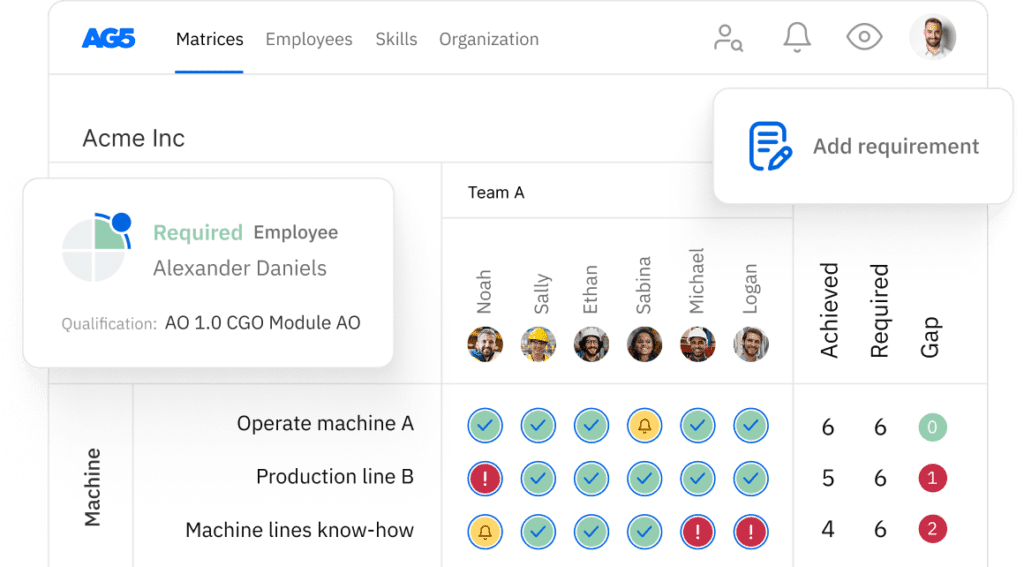
- Make it visible in a matrix. Map who holds each critical skill, at what level, in a skills matrix. Concentration risk becomes obvious at a glance, and production skills management shifts from tribal memory to a live, shared record.
- Cross-train against it. Use the matrix to pair each expert with learners, train against the documented standard, and certify the result. The goal is at least two qualified people for every critical skill before the calendar forces the issue.
Documentation techniques that actually work
The default approach, handing an expert a blank SOP template, produces thin results, because experts cannot see their own expertise. These formats extract more:
- At-the-machine video. Record the expert performing the task while narrating aloud. Ten minutes of footage captures hand positions, listening pauses, and checks that a written procedure would never mention.
- Prompted interviews. Ask about failures, not procedures: “Tell me about the last time this machine fooled somebody.” Stories surface judgment rules that direct questions miss.
- Reverse shadowing. Have the learner perform while the expert watches and corrects. The corrections are the tribal knowledge, spoken aloud for the first time.
- Near-miss debriefs. Each time experience quietly prevents a problem, write down what the veteran noticed and when they noticed it. Prevention know-how is the most valuable kind and the least documented.
Using a skills matrix to make knowledge visibleCopied
Documentation alone does not tell you where the risk sits. A skills matrix does: with people on one axis and skills on the other, every one-deep skill stands out as a column with a single qualified name in it.
That visibility changes the conversation. Instead of “we should capture Frank’s knowledge someday,” supervisors see that Frank is the only level-4 on two critical skills and retires in nine months. Filters by retirement horizon, shift, and site turn a vague worry into a ranked worklist. Skills matrix software keeps that picture current as certifications are earned and people move, which is the part static spreadsheets never sustain; AG5 builds the matrix directly from live qualification records for exactly this reason.
The matrix also protects the knowledge you have already captured. When a documented skill has an owner, an assessor, and an expiration date, it stays maintained. Documents without owners rot quietly in shared drives.
Treat captured skills like certifications. Give each one a named owner responsible for keeping the standard current, a list of qualified assessors, and a review date, so the record ages visibly instead of silently. When the underlying process changes, the skill definition changes with it, and everyone qualified against the old version shows up for requalification.
Cross-training to remove single points of failureCopied
Capture makes knowledge safe to transfer; cross-training actually transfers it. Prioritize by risk: rank critical skills by production impact multiplied by scarcity, and start where an expert’s departure would hurt most and soonest.
Then schedule the transfer like production, because “when things quiet down” never arrives. Pair the expert with one or two learners, set a sign-off deadline ahead of any known retirement date, and run structured sessions against the documented standard rather than open-ended shadowing. Certify learners with the same rigor you would apply to any qualification, and update the matrix the same day.
A simple structure for the final year of an expert’s tenure: months one through three, document and standardize their critical skills; months four through nine, train and certify two successors on each; months ten through twelve, reverse the roles, with the successors running the work while the expert audits. Those last months are the cheapest insurance the plant will ever buy.
Where no departure date is known, use thresholds instead: any critical skill held by a single person triggers the same pairing process automatically, regardless of anyone’s retirement plans. Resignations do not send save-the-dates.
Track one number to know whether it is working: the count of critical skills with fewer than two qualified people. When that number trends toward zero, tribal knowledge has become organizational capability, and no single resignation letter can take it away.
FAQs Copied
-
What does tribal knowledge mean?
-
Is there another term for tribal knowledge?
-
Why is tribal knowledge a risk in manufacturing?
-
How do you capture tribal knowledge before employees retire?
Author Copied

Revisions Copied
Written by: Rick van Echtelt
Copy edited by: Adam Kohut