SAP Connect 2026: The real story isn’t the number of agents, it’s the business outcomes they deliver.
Framework, model, matrix and scale are four different things. Getting the first one wrong breaks the other three.

 Reviewed by Grace Roberts
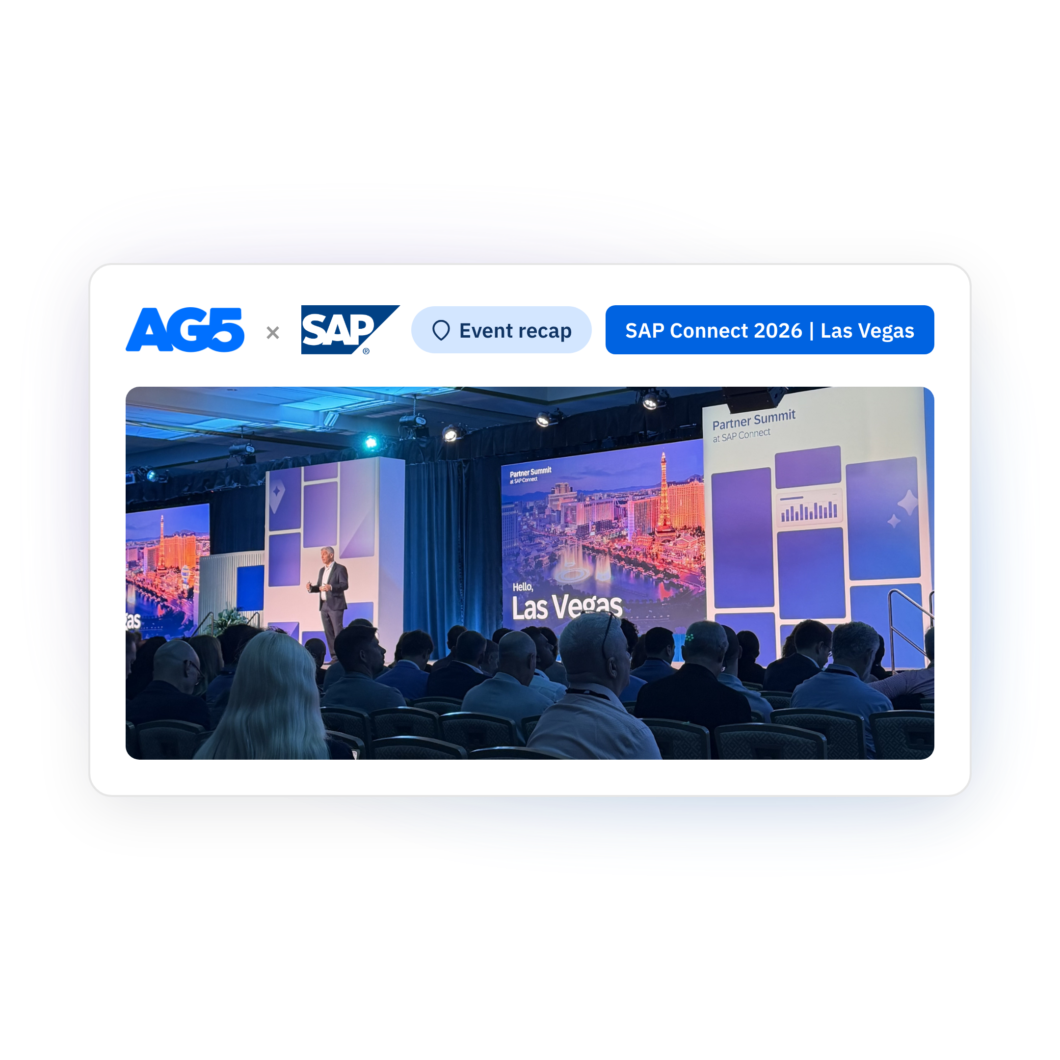
One word kept coming up at SAP Connect 2026 in Las Vegas last week: outcomes.
You could hear it in how SAP talked about its own products. In his keynote, SAP CEO Christian Klein put it plainly: “The real story isn’t the number of agents. It’s the business outcomes they deliver.” For me, that set the tone for the rest of the week.
AI announcements continued to dominate the event, but the conversations in the hallways were more practical. What does this technology actually change, and what does it mean for the people who use it every day?
That question is most prevalent on the factory floor. A plant can have a modern HR stack, a full skills library and a learning system, and still not know whether it can run Line 4 tomorrow with the people on shift.
Here are four things we took away from the week, and what they mean for organizations with large frontline workforces.
1. The conversation is moving from generative AI to Agentic AICopied
A year ago, the question was what AI could write or summarize. This year, it was what AI agents can do on their own. SAP’s direction is the Autonomous Enterprise: Joule and a growing set of AI agents that don’t just surface information but execute tasks and orchestrate workflows across systems.
In HR, that presents itself as Autonomous HCM. SAP is moving SuccessFactors beyond administration into proactive skills intelligence, workforce decisions and automated processes.
For frontline operations, AI-driven staffing recommendations are only as reliable as the data behind them. Recommending who can cover a shift requires up-to-date, verified information on who’s qualified to operate a particular machine, at a specific site, on that shift. AG5 helps ensure that the underlying qualification data is accurate, up to date and tied to the actual requirements of the work, giving AI the evidence it needs to make reliable recommendations.
2. Outcomes beat featuresCopied
The feature tour is over. Across sessions and hallway conversations, the focus was on adoption, realized value and measurable results. Implementing the technology is the first step in the process.
I think that is the right shift. In manufacturing, the outcome that matters is rarely “better skills visibility” on its own. It is the line that keeps running when someone calls in sick. It is the audit that closes without a finding and it’s the new hire who is signed off and productive in weeks rather than months.
One way to put it: missing one qualification can mean a whole shift is sent home. That is the outcome conversation operations leaders want to have, and it is a different conversation from “what skills do our employees have?”
Still running SuccessFactors but still tracking machine or site qualifications in spreadsheets? Book a short SAP + AG5 walkthrough.
3. AI is only as good as its data, and a lot of that data still lives in ExcelCopied
SAP was clear that enterprise data is the foundation for useful AI. Its investment in the SAP Knowledge Graph and a unified data foundation is about connecting fragmented information so agents can reason over it. And, in case anyone missed it, SAP has since announced it will acquire TechWolf, the company behind a “context graph for work” that maps tasks and skills across an organization. Congratulations to everyone involved. It’s a clear sign of where things are heading: AI grounded in real data about real work.
Which brings us to the uncomfortable part for most manufacturers, the data that decides who can do what on the shop floor often never reaches the core HR system. Skills matrices, machine authorizations, site-specific sign-offs and requirement lists sit in spreadsheets, SharePoint lists and homegrown tools, often a different one at every plant.
That creates two problems:
- AI can’t rely on it. An agent can’t reason over a matrix saved on a supervisor’s laptop. And even if it could open the file, that data is rarely connected to other systems, structured the same way from site to site, governed, or up to date.
- It can’t be inferred. A system can pattern-match from résumés and reviews to suggest someone has a skill. It can’t infer whether someone is certified on Equipment X today. In a regulated plant, that has to be evidenced, with who signed it off, when, and against which version of the procedure.
The fix is turning that frontline data into structured, governed records that the rest of the enterprise can use. If every site needs its own spreadsheet to make the global system work, you don’t have standardization yet.
4. The ecosystem is essentialCopied
SAP’s vision for the Autonomous Enterprise isn’t something SAP intends on building alone. It relies on partners bringing specialized expertise, data and industry-specific capabilities into the platform.
That came through in how SAP talked about partners at SAP Connect 2026. Open standards for connecting external tools and context, and an explicit invitation for partners to build specialized capabilities where industries need depth.
We found this one the most encouraging. It recognizes that a single platform can provide the enterprise foundation, while specialist systems supply the operational detail that specific industries depend on.
What this means for frontline operations: a skill is not a qualificationCopied
When putting the four takeaways together I noticed one distinction stands out. Knowing what people can do is not the same as knowing whether they are qualified and authorized to do a specific piece of work.
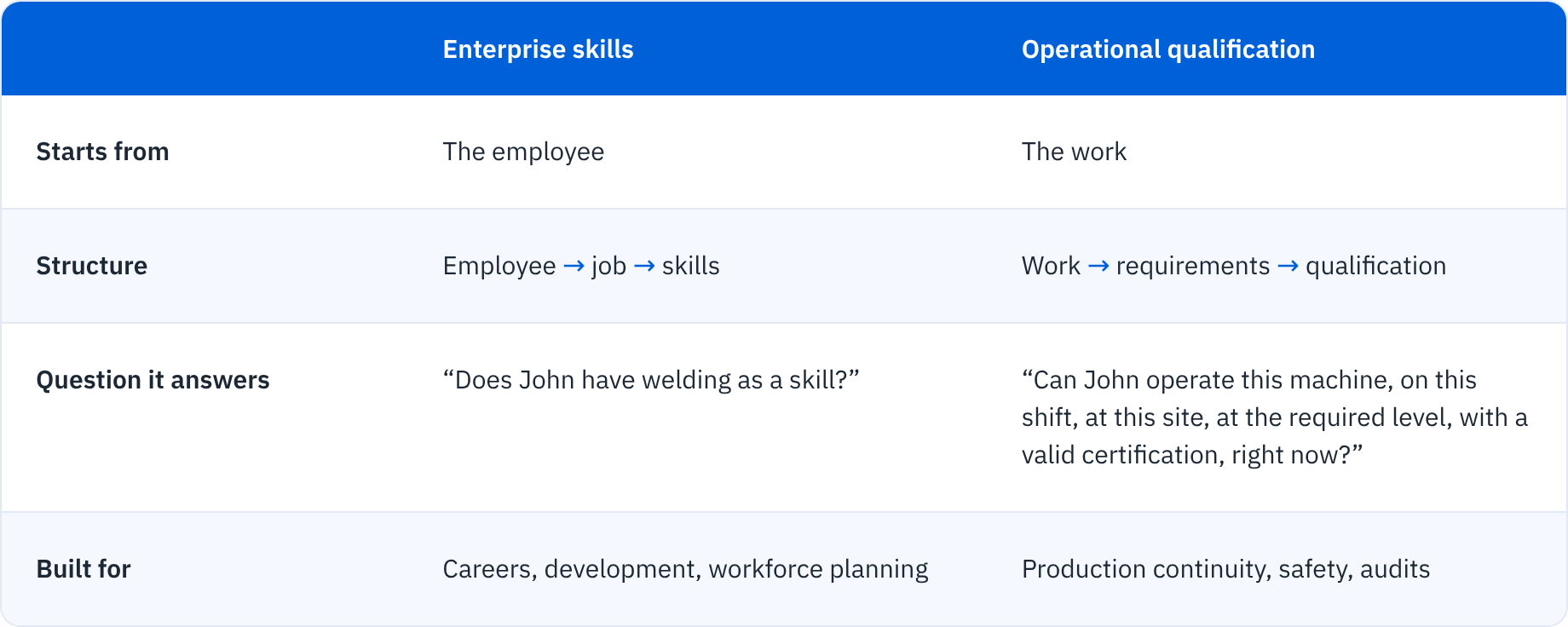
A qualification often depends on several conditions at once, skills, completed training, observed competence on the job, certification, authorization and site-specific requirements. Each can be recorded somewhere. The hard part is managing how they combine against real work, across machines, lines, tasks and sites, and keeping it current when a procedure changes.
This matters most for global manufacturers where corporate want one standard. Every plant has its own equipment, regulations and customer requirements. Without a governed model, sites drift: the same skill under three names, modified proficiency levels, an old version kept in Excel. HQ ends up with a global standard on paper and a fragmented reality underneath it.
When that data is structured, an AI agent has something trustworthy to work with. When it isn’t, the agent is guessing.
Where AG5 fits alongside SAPCopied
SAP SuccessFactors provides the enterprise foundation for people, skills, learning and AI. AG5 extends that foundation into frontline operations, connecting employee skills, learning and qualifications to the specific requirements of the work.
Take a question plant supervisors ask every day: who can run the Line 4 packaging machine tomorrow? The answer depends on the plant’s own requirements, such as a valid lockout/tagout certification, a sign-off on that machine and the site’s safety induction.
Answering it means joining up four systems:
- SAP Employee Central provides the employee and organizational data that establishes who works where, and in which role.
- SAP Learning records training, assessments and learning-related certifications, showing what training each employee has completed.
- SAP Talent Intelligence Hub provides the enterprise skills framework, including the skills and proficiency levels associated with each role.
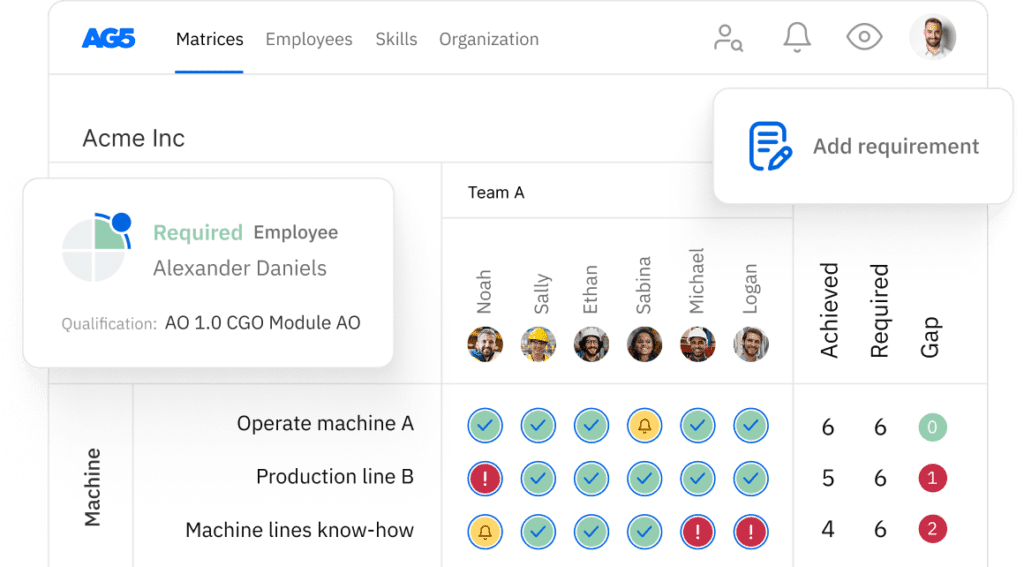
- AG5 maps this information to operational requirements, defining which qualifications are needed for specific machines, tasks, processes and sites, and showing whether employees meet them.
The value is in the connection. Employee records tell you who someone is, the learning records show what training they’ve completed, the skills framework describes the capabilities that go with their role. AG5 maps all of that to the requirements of the work itself, so frontline teams can see who is qualified for what, where and when.
Every qualification is backed by time-stamped, bookkeeping-style records that hold up in an audit, and because the systems are connected, the picture stays current as certifications renew and procedures change.
The same setup works across every plant. Global standards can be defined once, adapted locally where reality requires it, and governed centrally.
SAP Connect 2026 left us more convinced than ever that frontline-heavy organizations need to connect enterprise intelligence to the operational reality of the shop floor. Thanks to the SAP team for another great week, and to everyone who stopped to talk. We’re already looking forward to the next meet-up.
Still managing qualifications in Excel alongside SuccessFactors?
If your plants track machine, task or site-level qualifications in spreadsheets while the rest of your people data lives in SAP, we’d like to show you what changes when the two are connected.
Author Copied
Revisions Copied
Written by: Nic Terwindt
Copy edited by: Grace Roberts