How Etex Group turned its skills gaps into a €600,000 financial argument
Machines stay running, trainers are deployed efficiently, and the numbers speak for themselves.
When the skills matrix stops the machines
Etex Group is a global building materials manufacturer that knows exactly what workforce mismanagement costs. Not in abstract efficiency terms, but in euros, in stopped machines, in training hours that should never have been spent.
At the plant Patrick Cornelissens oversaw as Operations Training Manager, the skills matrix lived in Excel. When it wasn’t current, which was often, the consequences showed up on the factory floor.
“The most painful thing that we saw the last five years is that we sometimes had to stop the machines because we haven’t updated the skills matrix that we have in Excel,” Cornelissens said. “Three people are there doing something, but not working on the machine, so it brings no value.”
A stopped machine is lost output, but a spreadsheet nobody kept current is a fixable problem. Etex found both were connected, and that solving the second one unlocked more than €600,000 in recoverable value at a single plant.
The labour behind the old system
Before AG5, the plant Cornelissens oversaw for 10 years ran with two, sometimes three, full-time workers dedicated to training administration. These employees delivered training, as well as handled the validation, coordination, and upkeep that came with managing a complex skills matrix manually.
“It was a lot of labor,” Cornelissens said.
This means those employees weren’t always delivering training value, because much of their time was spent maintaining infrastructure.
We sometimes had to stop the machines because we haven’t updated the skills matrix that we have in Excel.
Patrick Cornelissens
Operations Training Manager, Etex Group
The numbers that got management’s attention
Cornelissens doesn’t speak in vague efficiency gains. He speaks in euros.
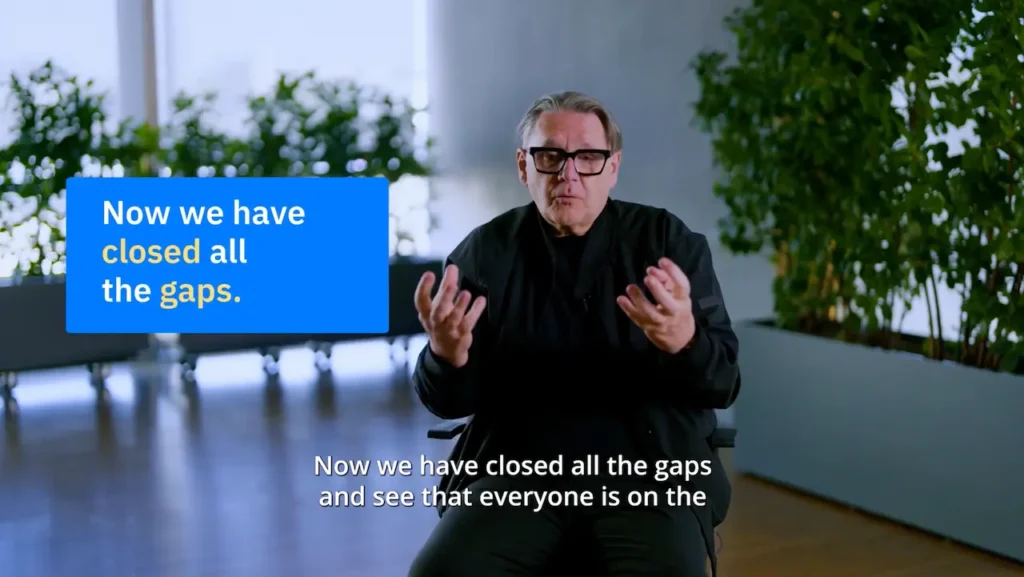
The plant was spending 25,000 hours on training per year, he said. In Belgium, one training hour costs €50. With AG5, gaps in the skills matrix became visible, were systematically closed, and the training picture sharpened dramatically.
“In place of 25,000 hours, we now spend no more than 15,000 hours. So that’s 10,000 hours less than previous years. At 50 euros per hour, that’s 500,000 euros,” Cornelissens said.
On top of that, the automation AG5 enables has reduced the master trainer requirement from three people to one or two, resulting in a direct saving of €100,000 in Belgium alone.
The total recoverable value at a single plant was over €600,000.
“That is what the managers want to hear: how much money it brings to the company,” Cornelissens said.
If you can do that with the skills matrix, it will bring value to the company. And that is what the managers want to hear: how much money it brings to the company.
Patrick Cornelissens
Operations Training Manager, Etex Group
Insight that shapes how a factory is built
Beyond the cost savings, Etex’s experience with AG5, which included a pilot in Poland, revealed structural issues that were important to address. The platform brought to the surface the overall functionality of the company and its employees, especially in how they interact with one another.
“AG5 brings us a lot of insights on how a factory has to be built and how the roles are. That’s for me the most valuable thing that I saw with the pilot in Poland,” Cornelissens said.
That kind of replicable, consistent, data-driven clarity turns a skills tool into a strategic asset. The €600,000 saving is also compelling, of course – and a hard number like that tends to steal the show – but the ability to build better factories from the ground gives Etex Group the staying power to play the long game.