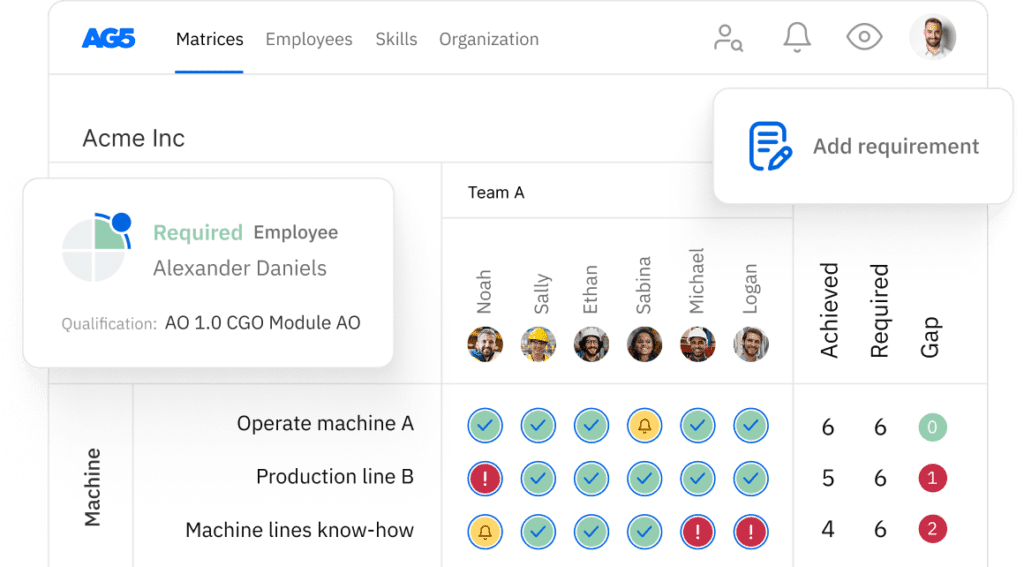
Skills-based shift planning for seasonal peaks and daily rosters
A shift is covered when every station has someone signed off to run it. Here is how to plan that, ramp included.

 Reviewed by Adam Kohut
A frozen vegetable processor runs 140 people in February and 390 in August. The extra 250 arrive over six weeks, and most have never seen the line. Every one of them needs sign-off on hygiene, allergen handling and at least one station. All of it before the first pallet ships. The roster for week one of the season is a qualification problem before it is a scheduling problem.
This article is about that handoff. How operations that swing with the season, or that simply run three shifts across several sites, plan coverage from qualification data, and where the planning system stops and the scheduling system starts.
Why is coverage a qualification question, not a headcount one?Copied
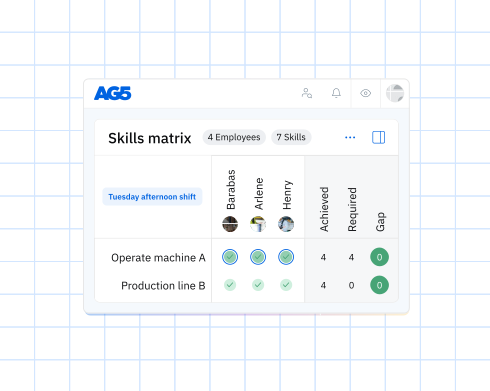
Because a shift is covered when every station has someone qualified to run it, not when the number of bodies matches the plan. Twelve people on a line that needs twelve is not coverage if none of them is signed off on the metal detector check. The headcount is right and the line still cannot run.
Skills-based shift planning starts from the requirement per station, per shift, per site: which qualifications, at which level, held by how many people. AG5 calls this the training requirements layer. Against it sits the live status of everyone available to work.
The difference between those two is the coverage gap. It is computed, not counted by a supervisor with a highlighter at six in the morning.
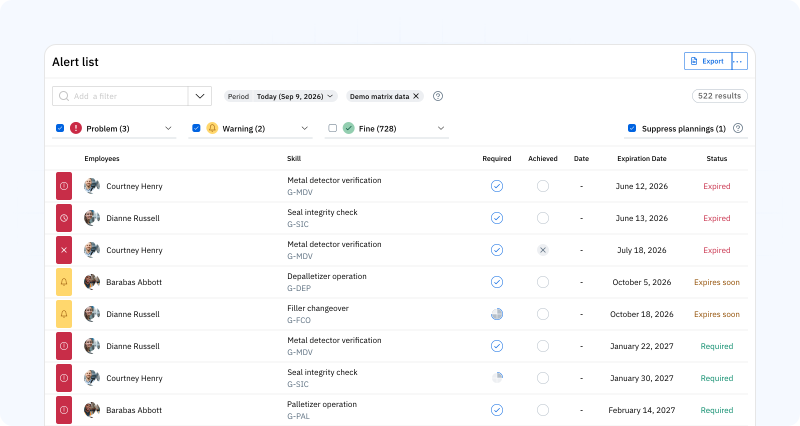
The practical consequence is that coverage becomes a number you can see a week out rather than a discovery you make at shift start. That single change is most of the value, and it does not require anyone to plan differently. It requires the requirement and the current status to sit in the same place.
How do you plan workforce coverage for seasonal demand?Copied
Backwards from the first sign-off, not forwards from the first hire. Seasonal operations in food, beverage, horticulture and parcel logistics face the same sequence every year, and the steps that make it work are almost entirely about timing rather than about training quality.
- Fix the station requirements before recruitment starts. The number of hygiene sign-offs needed in week one determines how many trainers are needed in week minus two.
- Onboard from a role template. A seasonal packer at a given site inherits a fixed set of required qualifications on day one, so nothing has to be remembered per person.
- Sign off on the floor, not at a desk. Supervisors assessing new starters record the result on a phone at the station. A day’s lag between assessment and record is a day the roster cannot use that person.
- Track expiry into the season. Short-cycle qualifications, such as a 90-day hygiene refresher, can lapse mid-peak. The plan has to include re-verification, not just initial sign-off.
- Keep the returners’ records. A third of seasonal staff come back the next year. If their qualifications were archived along with their contract, they start from zero again.
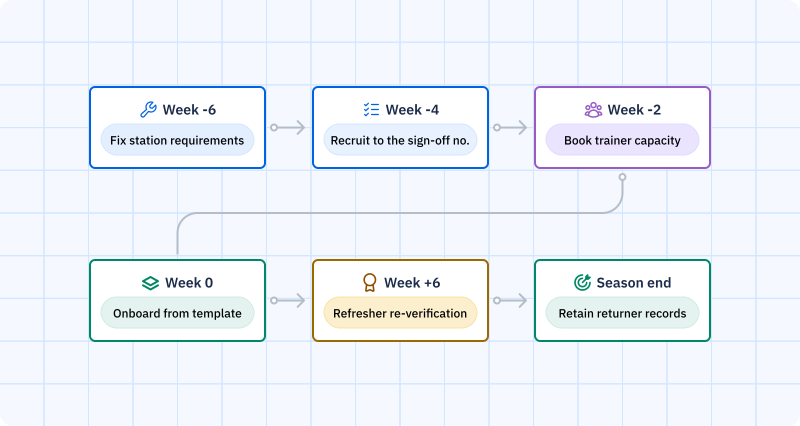
Of these, the first matters most and is the one most often skipped. Recruitment runs on HR’s clock and station requirements run on operations’ clock, and in most businesses the two are never laid side by side until the season has already started.
The last one is worth designing for explicitly rather than assuming. Ask your system how a leaver’s qualification history is treated, and whether a returning seasonal worker is reinstated with their record intact or created afresh. The answer decides whether you pay to train the same people every year.
Where does shift planning stop and scheduling start?Copied
At the point where “who is allowed to do this” becomes “who is working Tuesday night”. Outside the ramp, the same qualification data serves the daily roster, and the division of labor is clean if you keep it that way.
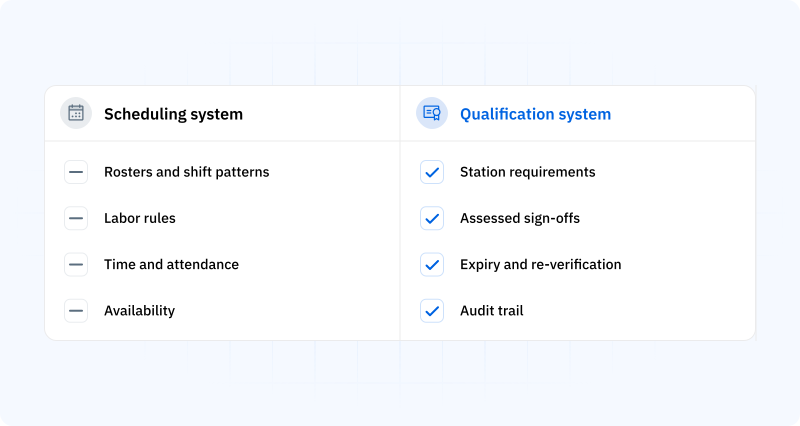
The scheduling system builds the shift. The qualification system tells it who is allowed to be on it. In practice the scheduler only offers qualified people for a station. It flags any shift with a station uncovered. And it shows the nearest person who could cover, if one more sign-off were completed.
That last view is where cross-training decisions come from, and it is the reason skills-based planning pays for itself twice. If the Tuesday night shift is one person away from covering the palletizer, next month’s training plan writes itself. The cross-training playbook covers how to run that program without it becoming an open-ended initiative.
This is a two-system arrangement by design, not a gap in the market. Scheduling tools such as workforce.com, UKG and Quinyx are good at rosters, labor rules, and time and attendance. They were not built to hold assessed, versioned qualifications with an audit trail behind them. AG5’s workforce readiness view is built for exactly that, and feeds the scheduler through the integrations.
How do you cover shifts across multiple sites?Copied
When a site is short, the fastest cover is often someone from another site an hour down the road. That only works under two conditions, and both of them are decided long before the shortage happens.
First, “forklift, counterbalance, 3-ton” has to mean the same thing at both locations. Second, the person’s record has to travel with them. One skill library across sites, with local requirements layered on top, is what turns a cross-site loan into a five-minute decision instead of a week of emails between two plant managers. JDE Peet’s runs this way across more than 40 plants on a single standardized skills framework.
One caveat that cross-site planning tends to forget: local regulation does not travel. A qualification valid in one jurisdiction may need a local refresher in another, and the system should surface that difference rather than quietly assume equivalence. Check how yours handles it before you build a loan process on top of it.
Where AG5 fits in shift and coverage planningCopied
AG5 holds the station requirements and the live qualification status for frontline operations. It computes coverage gaps by shift and by site, onboards seasonal staff from role templates with sign-off recorded on the floor, and passes qualification status to the scheduling system you already run.
Food and beverage producers, parcel and warehouse operators and multi-site manufacturers use it for the seasonal ramp and for the daily roster. For the wider picture on where it sits among planning tools, see workforce planning tools ranked by use case.
FAQs Copied
-
What is skills-based shift planning?
-
How do you plan workforce coverage for seasonal demand?
-
Does a scheduling tool replace a skills management system?
-
How does shift planning produce cross-training decisions?
Author Copied

Revisions Copied
Written by: Rick van Echtelt
Copy edited by: Adam Kohut