Top 5 product skills management companies to watch in 2026
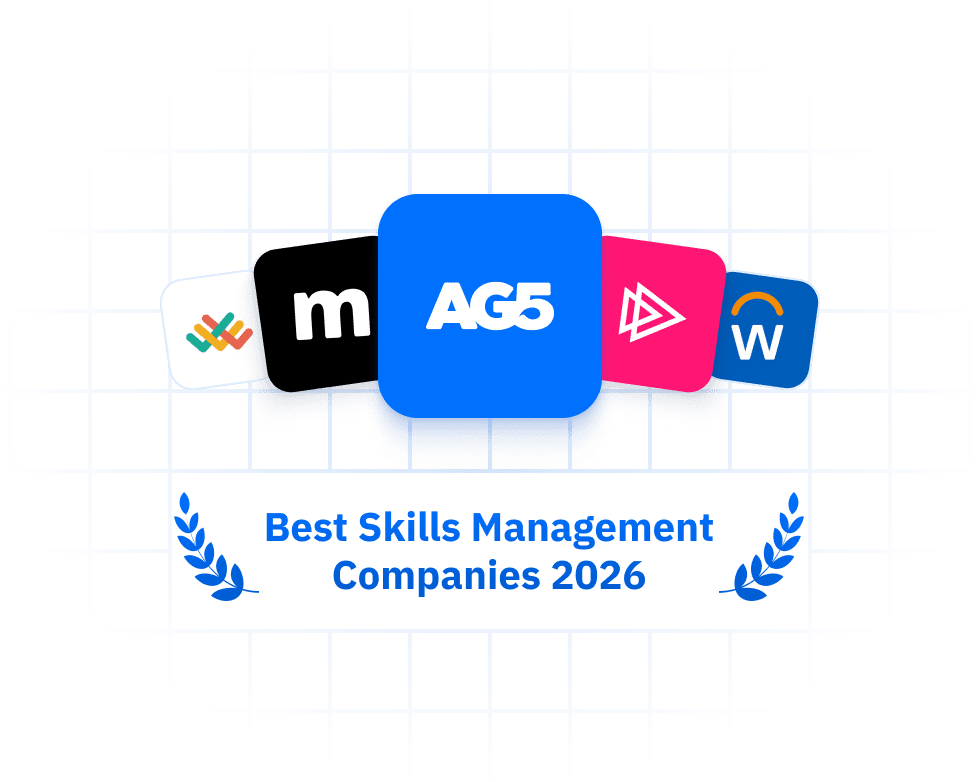
Learn why product skills management has become mission-critical in 2026. This comprehensive guide compares the top 5 platforms — AG5, Lattice, Pluralsight Skills, Workday, and MuchSkills — helping you choose the right solution for tracking certifications, closing skill gaps, and building agile teams.

 Reviewed by Adam Kohut
Product skills management is the organized approach to tracking and building the skills needed to create great products. Moreover, in today’s fast-changing market, workforce agility determines winners. If 2025 taught us anything, the skills gap is now an operational risk with real financial impact.
Winning companies entering 2026 have the most agile teams. Organizations succeed when they build the most visible and capable people. Static spreadsheets no longer work for tracking skills. Therefore, managing product skills has become a must-have strategy.
This guide covers why skills management matters in 2026. Furthermore, it reveals the five top platforms changing how companies manage talent. Additionally, we’ll show what makes these tools different from basic HR software. Finally, you’ll learn practical steps to start your own skills management strategy.
Why product skills management matters in 2026Copied
Modern products have become incredibly complex. Whether you track certifications for factory teams or manage skills for remote engineers, a dedicated skills system delivers clear benefits. Organizations across industries are discovering that product skills management creates both measurable and undeniable value.
Product skills management: The business case
- Audit-ready compliance
In regulated industries, saying “I think they’re trained” creates legal risk. Modern platforms provide instant, audit-proof records. Furthermore, these systems show who has which skills and when certifications expire.
Consider this impact: A single failed audit can cost over $500,000. Product skills management platforms help companies report 95% faster audit prep. Consequently, organizations see fewer compliance issues overall.
- Safety through clear visibility
Assigning the wrong person to critical tasks isn’t just inefficient. Rather, it’s a liability that can cause safety incidents or product recalls. As a result, effective product skills management ensures only qualified people handle sensitive work.
Deploying uncertified staff in software creates regulatory exposure. Similarly, unqualified operators in manufacturing create safety hazards. Therefore, modern platforms flag these mismatches before they become problems.
- Targeted training investment
You can’t fix what you can’t measure. By viewing skill gaps in real time, companies deploy training where it matters most. Indeed, product skills management enables precision upskilling instead of generic programs.
Identify the exact three people who need AWS certification, for instance. Alternatively, find the five supervisors who need quality training. This precision turns training from a cost into a strategic investment.
- Better employee retention
Top talent in 2026 demands growth and clear career paths. A visual map showing current skills versus next-role requirements drives engagement. Organizations implementing product skills management see retention improve when employees understand exactly what they need to learn.
Organizations report 15-25% less regrettable turnover after implementing skills visibility. Since replacing a skilled employee can cost 2x their salary, these retention improvements are highly valuable.
How product skills management evolved
The product skills management market has matured significantly. Early solutions were basically fancy spreadsheets. Today’s leading platforms combine visual intelligence and predictive analytics. Moreover, they include integration tools and compliance automation.
This distinction matters greatly: Generic HR suites treat skills as simple profile data. In contrast, specialized product skills management platforms treat skills as operational assets. These drive scheduling, project assignments, and workforce planning decisions.
The top 5 product skills management companiesCopied
We analyzed the competitive landscape and evaluated customer results. Additionally, we reviewed platform capabilities and assessed market momentum. Here are the top performers driving real ROI in 2026.
1. AG5: Leading product skills management platform
AG5 takes the top spot for one compelling reason: clarity without clutter. While other product skills management platforms have become bloated, AG5 doubled down on being the best at visualizing complex skills matrices.
It bridges the gap between rigid compliance and agile workforce planning. For companies that need to know who’s qualified right now, AG5 provides a single source of truth. The platform is visually clear for any manager while being technically robust for auditors.
Why AG5 ranks #1:
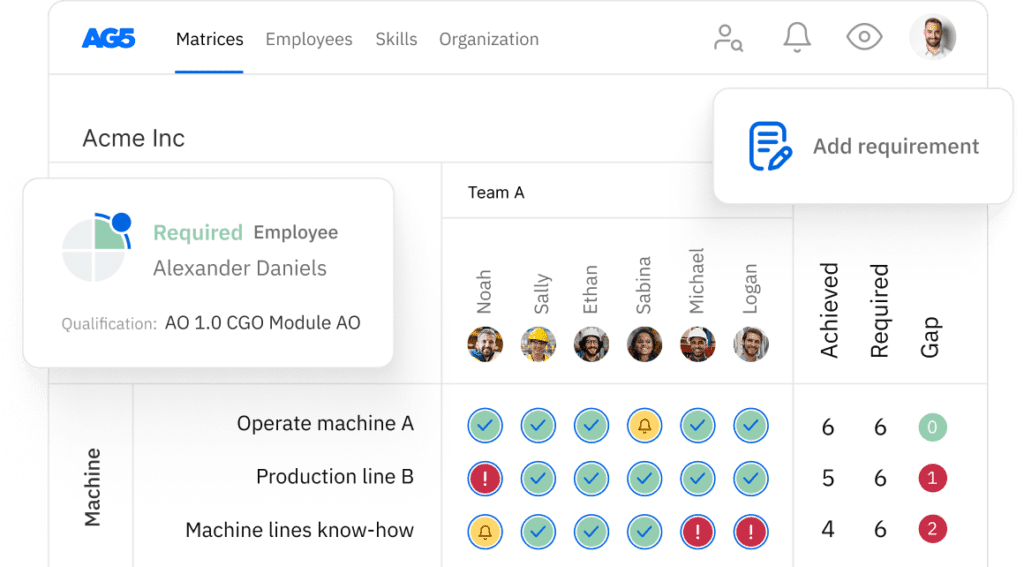
- Visual skills matrices replace clunky spreadsheets with beautiful grids. Managers see capability gaps instantly. Consequently, decision time drops from hours to seconds
- Audit-proof infrastructure tracks certifications and renewal deadlines automatically. Every skill entry includes evidence trails. During audits, produce complete docs in minutes
- Fast implementation delivers value quickly. Unlike legacy HR suites taking 6-12 months, AG5 deploys in 4-8 weeks. Most organizations see value in the first week
- Easy integration connects with existing LMS, HRIS, and project management tools. It acts as an intelligence layer without requiring costly system replacements
- Flexible framework adapts to your needs. Track ISO certifications, software skills, safety qualifications, or soft skills. AG5 adapts to your model instead of forcing rigid structures
Best for: Organizations with 50-5,000 employees needing sophisticated product skills management without enterprise complexity. Particularly strong in manufacturing, engineering, and regulated industries.
2. Lattice: Skills management for culture
Lattice remains strong in the People Success category. While primarily a performance management platform, their Grow product includes sophisticated skills tracking. These product skills management capabilities integrate with broader talent development workflows.
Key strengths:
- Complete talent ecosystem connects skills development with feedback, goals, and performance reviews. Accordingly, skills become part of broader employee journeys
- Strong engagement focus excels at documenting 1:1 meetings and collecting feedback. When product skills management is part of employee experience strategy, Lattice creates cohesive journeys
- Clean user experience provides an intuitive interface that employees actually want to use. User adoption is half the battle in skills management
The verdict: Lattice excels if your focus is cultural engagement and connecting skills to people development. However, for rigorous audit trails and complex operational matrices, it may lack the depth of specialized platforms.
Best for: Tech companies and professional services where product skills management focuses on career development rather than operational verification.
3. Pluralsight: Technical skills management
Pluralsight has become a staple for software product teams. Their strength lies in their massive course library. It covers virtually every programming language and technology stack. Additionally, they offer validated skill assessments for technical proficiency in product skills management.
Key strengths:
- Huge technical library offers thousands of expert courses covering emerging tech and established platforms. Pluralsight has comprehensive content when your team needs to learn Kubernetes or React
- Skill assessments use validated tests to measure actual technical proficiency. Consequently, organizations can benchmark team capabilities against industry standards
- Learning pathways leverage AI-powered recommendations to guide employees through structured paths. This reduces overwhelm and creates clear development trajectories
The verdict: Pluralsight excels for learning new technical skills. However, it operates primarily as a learning platform rather than an operational product skills management system. It struggles with non-technical certifications and workforce planning integration.
Best for: Software development organizations and IT departments where the primary need is assessing technical proficiencies.
4. Workday: Enterprise skills management
No complete analysis skips the enterprise incumbent. Workday manages everything from payroll to workforce planning. Their Skills Cloud represents their entry into product skills management intelligence. It uses machine learning to suggest skills and predict future needs.
Key strengths:
- Complete enterprise integration creates seamless workflows if you already run Workday for HR and payroll. Skills Cloud provides a single source of data across all talent processes
- Advanced AI analyzes skills across your organization comprehensively. It suggests skill recommendations and identifies career mobility paths. Additionally, it predicts future skills needs based on strategy
- Enterprise scale supports global organizations with tens of thousands of employees. It provides proven reliability and established vendor relationships
The verdict: Workday is powerful for massive enterprises wanting one vendor for everything. However, it’s expensive and complex to configure. Mid-market companies often pay for unused features while struggling with complexity.
Best for: Global enterprises with 10,000+ employees that already have significant Workday investments. Less suitable for mid-market organizations needing rapid deployment.
5. MuchSkills: Visual skills management
MuchSkills brings a refreshingly different approach to product skills management. It offers highly visual, infographic-style skills mapping. Additionally, it focuses heavily on soft skills and team dynamics. This resonates particularly well with creative and design-led organizations.
Key strengths:
- Beautiful visuals feature unique circular skills maps that employees genuinely enjoy using. Adoption rates soar when product skills management feels more like social media
- Soft skills emphasis excels at capturing communication, collaboration, and creativity. This fills a gap for organizations where interpersonal skills matter as much as technical ones
- Quick team analysis rapidly visualizes collective team capabilities. Identify complementary skill sets and ensure balanced composition. This proves particularly valuable for agencies forming project teams
The verdict: MuchSkills provides a beautiful and engaging experience that employees love. However, it currently has limitations in handling rigorous compliance and safety certification tracking required by larger organizations.
Best for: Creative agencies, design studios, and marketing teams where soft skills and employee engagement are primary concerns. Less suitable for regulated environments.
Product skills management: Quick comparisonCopied
| Platform | Best for | Core strength | Implementation | Ideal size |
|---|---|---|---|---|
| AG5 | Operational excellence | Visual matrices | 4-8 weeks | 50-5,000 |
| Lattice | Culture integration | Talent development | 6-10 weeks | 100-10,000 |
| Pluralsight | Tech learning | Content library | 2-4 weeks | Any size |
| Workday | Enterprise HR | Complete suite | 6-18 months | 10,000+ |
| MuchSkills | Creative teams | Visual engagement | 1-3 weeks | 20-500 |
Choosing your product skills management platformCopied
Selecting the right product skills management platform requires honest assessment. Therefore, consider your organizational priorities and existing technology systems. Additionally, think carefully about your strategic objectives and workforce planning needs.
Primary use case for skills management
- Operational focus: Specialized product skills management platforms like AG5 provide unmatched depth if you need qualified people on critical tasks and audit-ready compliance
- Talent development: Alternatively, platforms like Lattice integrate these workflows if skills connect to broader employee development and performance management
- Technical learning: Similarly, Pluralsight’s learning-first approach makes sense if developing software competencies is your main objective
Implementation timeline considerations
Organizations facing immediate compliance exposure need rapid deployment. Regulatory pressure makes lengthy implementations create ongoing risk. Conversely, organizations with extensive change management resources can consider more complex solutions.
Integration requirements
Assess your existing HR technology landscape realistically. Adding Skills Cloud creates seamless integration if you already operate Workday enterprise-wide. However, you need flexible product skills management integration capabilities if you’re mid-market with multiple systems.
Your next steps with product skills managementCopied
Organizations still relying on spreadsheets or gut feeling should upgrade in 2026. The risk of compliance failure is too high. Moreover, the operational costs of skills gaps are simply too great to ignore when implementing product skills management.
Step 1: Conduct a skills assessment
Understanding your current state precedes evaluating product skills management platforms. First, document existing tracking processes. Then, identify gaps and pain points. Finally, establish baseline metrics. Key questions to answer:
- Can you produce audit-compliant skills reports in under 30 minutes?
- How many hours do managers spend tracking certifications monthly?
- Have you assigned someone who wasn’t actually qualified?
- What percentage of training budget closes critical gaps?
Step 2: Define success metrics
Establish clear, measurable outcomes for your product skills management implementation. These might include:
- Reduce audit prep time from weeks to hours
- Decrease time-to-hire by improving visibility into internal gaps
- Eliminate skill-related project delays
- Reduce regrettable turnover through clear career progression
Step 3: Engage stakeholders
Product skills management touches operations, HR, compliance, and finance. Build a cross-functional coalition by showing how it addresses each group’s pain points. Operations leaders care about capability visibility. Compliance teams care about audit readiness. Meanwhile, finance cares about training ROI.
Step 4: Start with a pilot
Rather than attempting organization-wide deployment immediately, identify a high-impact team to pilot your chosen product skills management platform. Select an area with visible pain points and motivated stakeholders. Subsequently, document success metrics and gather user feedback.
Ready to transform your skills strategy?Copied
Organizations that thrive in 2026 will treat skills as strategic assets. They’ll give product skills management the same attention as financial capital or customer relationships. The technology exists today. Ultimately, the question is whether your organization will adopt it proactively.
We recommend starting with a Skills Health Check. This structured assessment helps identify blind spots, quantify costs, and establish a roadmap for product skills management. Typically, this involves:
- Documenting current skills tracking processes
- Identifying critical skills gaps that impact delivery
- Assessing operational costs of poor visibility
- Mapping requirements to platform capabilities
- Building a business case with projected ROI
For organizations interested in AG5’s operational excellence approach, consider scheduling a free Skills Health Check consultation. This helps you discuss your specific context and explore whether their platform aligns with your product skills management needs.
Your product roadmap shouldn’t stall due to skills gaps. Compliance exposure shouldn’t grow unchecked. Top talent shouldn’t leave because you didn’t know who had the skills to drive success. The tools exist; now it’s time to implement product skills management.
FAQs Copied
-
What is product skills management?
-
Why do I need a dedicated skills management platform instead of spreadsheets?
-
How much does AG5 cost?
-
How long does it take to implement a skills management platform?
-
What's the difference between skills management and learning management systems (LMS)?
-
Which industries benefit most from product skills management?
-
Can skills management platforms integrate with our existing HR systems?
-
How do skills management platforms help with employee retention?
-
What's the ROI of implementing a skills management platform?
-
How is AG5 different from other skills management platforms?
Author Copied

Revisions Copied
Written by: Rick van Echtelt
Copy edited by: Adam Kohut