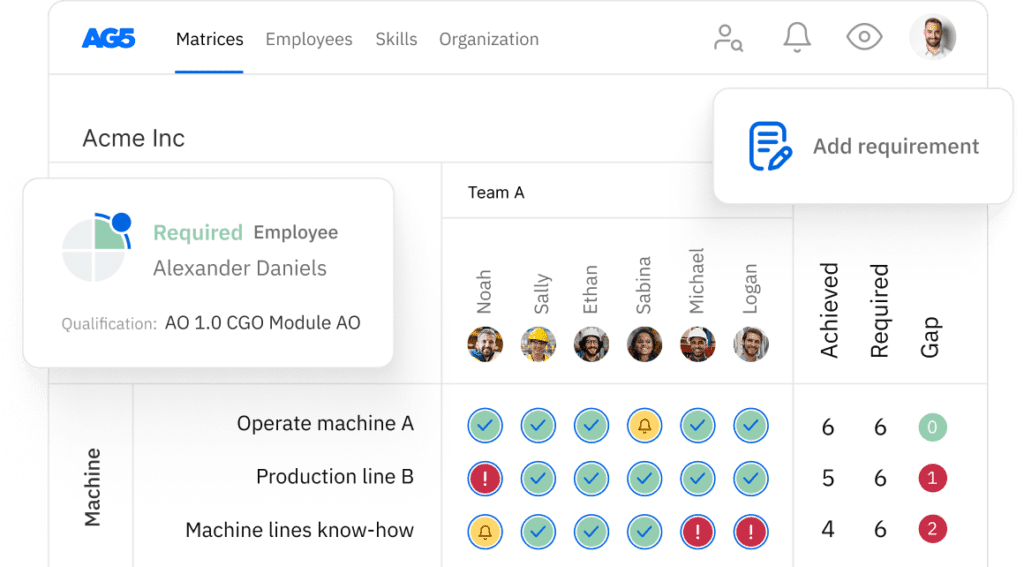
Beyond HRIS and LMS: Why organizations need dedicated skills management software
Discover where traditional HRIS and LMS platforms fall short in skill management.

Executive summary Copied
Human Resource Information Systems (HRIS) and Learning Management Systems (LMS) form the backbone of modern HR technology stacks. HRIS platforms manage employee data, payroll, compliance, and performance records, while LMS tools deliver training content, track course completion, and maintain certification databases. Given their comprehensive reach across workforce administration and development, many organizations assume these systems adequately address skill management needs. But that assumption often comes at a cost – operational inefficiencies from mismatched skills and roles, increased compliance risk from outdated certifications, and reduced workforce agility when critical capabilities go unseen until it’s too late.
However, this assumption creates a critical blind spot: while HRIS and LMS systems excel at managing data and delivering training, they weren’t designed to provide the dynamic intelligence organizations need for strategic, skills-based workforce planning – the type of planning that, according to Deloitte, makes them “107% to place talent effectively and 98% more likely to retain top performers.
Want to keep reading?
Get the complete guide with all insights and actionable strategies.

Tired of managing skills in Excel?
Say goodbye to Excel matrices. Start using AG5’s plug and play skill matrix software.
Recognized by G2 for Excellence in Skills Management