How CoorsTek chose the right skills management platform from a field of 34
200+ matrices, 10 languages, and one global standardization of validated skills, with expectations visible to every leader and employee.
A system that worked, until it didn’t
CoorsTek, Inc. manufactures advanced ceramic components for some of the most demanding applications in the world. With facilities across multiple countries and a workforce that must be qualified across hundreds of roles, competency tracking is the backbone of the company’s operational infrastructure.
For a long time, that infrastructure was Excel, hosted in Microsoft Teams to give it a cloud-based, shared layer. It was workable, but it didn’t always work.
“The pain point was that we had a system that was functioning, was tracking our skills, getting us that data back, but tended to fracture and break,” said Bridget Haley, CoorsTek’s Senior Instructional Designer. “As people were making their updates to their sheets, they’d get back an error message and we’d have to go back in and troubleshoot it.”
With over 200 matrices in use across the country alone, that troubleshooting burden was unsustainable, especially without dedicated in-house capability to maintain it.
A rigorous search with a surprising result
To find a solution, CoorsTek ran a formal evaluation of 33 or 34 vendors, assessed against two specific criteria.
The first was multi-language support. CoorsTek operates in 10 languages across its global sites. That requirement alone cut the field in half.
The second was a genuine skills matrix interface. For CoorsTek’s leaders, the ability to view employees against skills, proficiencies, and processes in a visual matrix is how they make decisions.
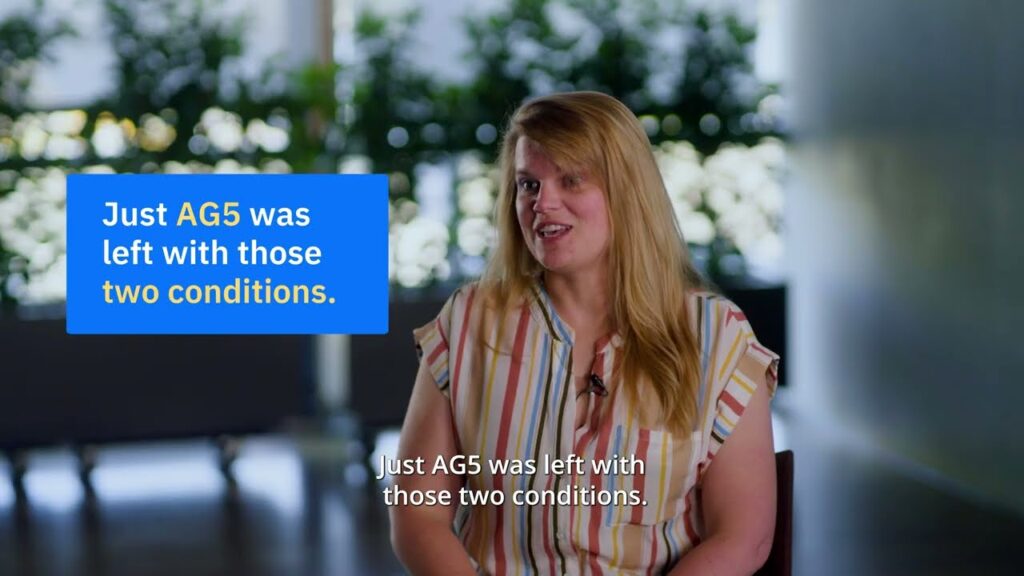
“The matrix was really, really important. And surprisingly enough, that left us with one company. Just AG5 was left with those two conditions,” Haley said.
We evaluated 33 or 34 different solutions against two criteria, and surprisingly enough, that left us with one company. Just AG5 was left with those two conditions.
Bridget Haley
Senior Instructional Designer, CoorsTek, Inc.
From assumptions to actual expectations
One of the most telling details in CoorsTek’s story involves what the company was doing before they could track development targets properly. With a four-point proficiency scale, most employees were assumed to be aiming for level three. This wasn’t because it was the right target for everyone, but because there was no way to specify otherwise.
“That’s just a general assumption we made because we weren’t able to track it before. But now with AG5, we’re able to actually specify: this person only needs to get to a two, or this person needs to get all the way to a four, so that they can train others,” Haley said.
That shift from a blanket assumption to an individual expectation changes the meaning of development. Leaders can set meaningful targets, and employees can see exactly what’s expected of them. Dedicated trainers in each facility also have the visibility to support people against those specific goals.
That expectation is not only visible to the leader, but now we can see it within the system.
Bridget Haley
Senior Instructional Designer, CoorsTek, Inc.
Building for a global future
CoorsTek’s ambitions extend well beyond the current rollout. The goal is to reach all global sites and create a common language for skills across borders, so any conversation about workforce capability maps directly to another, no matter where it takes place.
“We want to make sure we can support them in a pretty uniform way, so that we can talk about skills in the US in the same way that we talk about skills in Japan,” Haley said.
Onboarding has been smooth, and the team feels they’re building an understanding that will serve the company for the long term. That kind of relationship is exactly what 34 evaluated vendors and one clear winner was always going to be about.